Backdoor Roth for FIRE Movement: High Income Earners Retirement Strategy
Imagine a world where your high income doesn't limit your retirement savings options. For those pursuing Financial Independence, Retire Early (FIRE), this can be a game-changer.
Hitting those income ceilings for traditional Roth IRA contributions can feel like running into a brick wall. You're diligently saving and investing, eager to build that nest egg, but those pesky limits keep you from maximizing your potential. It can feel frustrating, especially when you're aiming for early retirement.
This post will delve into the backdoor Roth IRA strategy, a powerful tool for high-income earners within the FIRE movement to circumvent income limitations and unlock the benefits of tax-advantaged retirement savings.
In short, the backdoor Roth IRA is a strategy that allows high-income earners, who are otherwise ineligible to contribute directly to a Roth IRA, to convert traditional IRA funds into a Roth IRA. This offers tax-free growth and withdrawals in retirement. We'll explore eligibility, the conversion process, potential pitfalls like the pro-rata rule, and how this strategy aligns with the FIRE movement's goals. Keywords: Backdoor Roth IRA, FIRE, high-income earners, retirement strategy, Roth conversion, pro-rata rule, tax-advantaged savings.
Personal Experience with Backdoor Roth
I remember the day I first learned about the backdoor Roth. I was poring over FIRE blogs, feeling a pang of envy at those who had already achieved financial independence. Then, I stumbled upon a discussion about this seemingly magical strategy. At first, I was skeptical. It sounded too good to be true, a loophole designed for the ultra-wealthy. But as I dug deeper, I realized it was a legitimate and valuable tool for anyone exceeding the income limits for traditional Roth contributions. I started to think about the money that I can save by doing so.
The first time was intimidating, but I carefully followed instructions from my financial advisor and IRS guidelines. My biggest concern was the pro-rata rule, which could complicate things if you have existing pre-tax money in traditional IRAs. Luckily, I only had a small amount, which I decided to convert alongside my non-deductible contribution to simplify things. Each year, it becomes more routine.
The benefit of this strategy is tremendous for high-income earners. When you are in a high-income bracket, it can be hard to save for retirement. The Backdoor Roth IRA can help boost your investment in retirement and allow you to realize your goal. The Roth IRA allows your money to grow tax-free and be withdrawn tax-free in retirement. This provides an amazing option for FIRE followers.
What is Backdoor Roth?
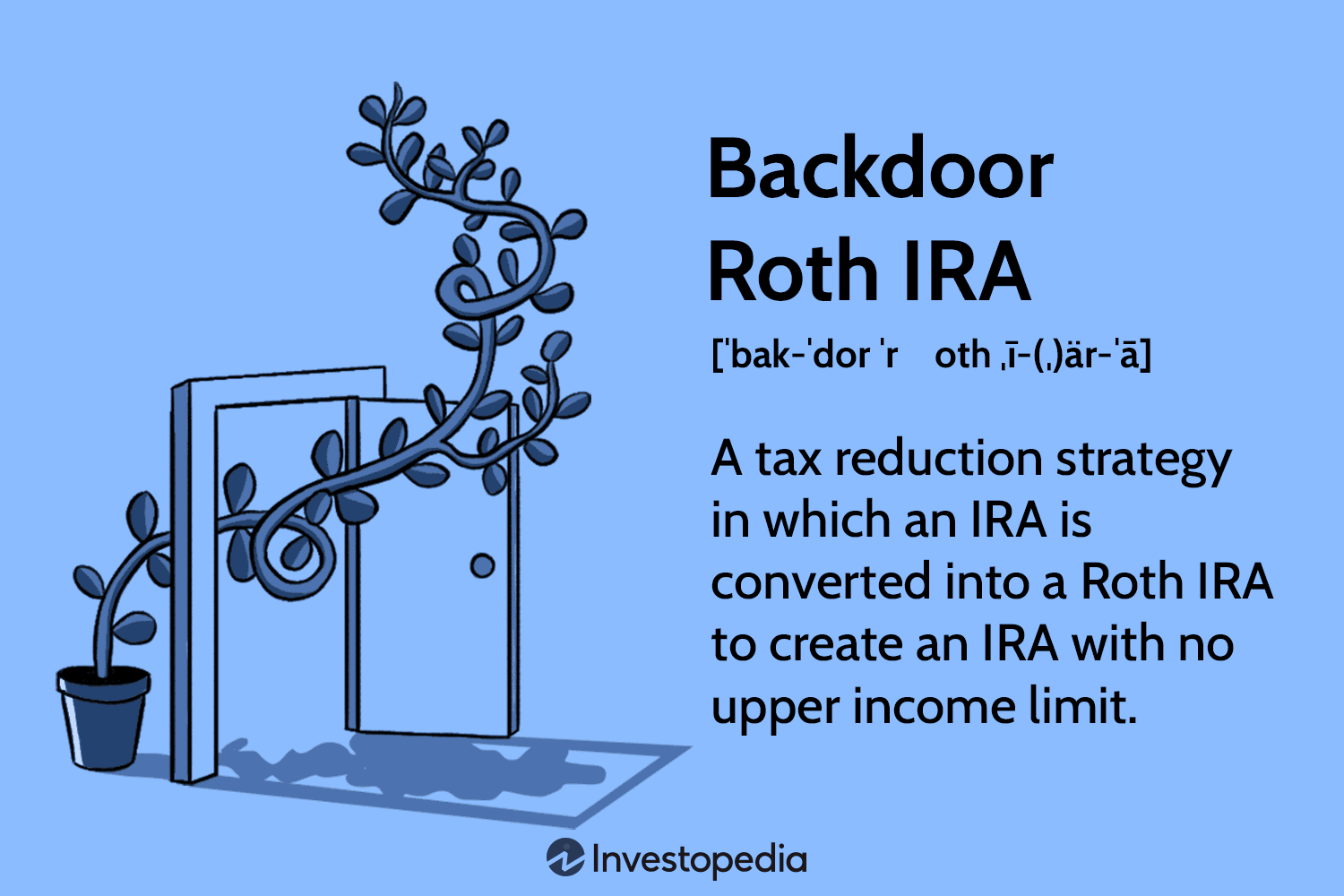
The Backdoor Roth IRA is a strategy for high-income earners to contribute to a Roth IRA, even if their income exceeds the direct contribution limits. It involves two steps: first, making a non-deductible contribution to a traditional IRA, and second, converting that traditional IRA to a Roth IRA. Since the contribution was non-deductible, the conversion is generally tax-free, although there can be tax implications if you have other pre-tax funds in traditional IRAs due to the pro-rata rule.
In essence, it's a workaround that allows individuals who are above the income threshold for direct Roth IRA contributions to still benefit from the tax advantages of a Roth IRA. A Roth IRA offers tax-free growth and tax-free withdrawals in retirement, which can be particularly beneficial for those in the FIRE movement who are planning to retire early and potentially have a long retirement period.
This strategy is powerful because it helps you to diversify your assets in retirement accounts. The Roth IRA contributions are made after tax, while traditional IRA contributions are made before tax. This allows for tax-free growth and tax-free withdrawals in retirement, which can be particularly beneficial for those planning to retire early. This can be an essential part of your FIRE strategy.
History and Myth of Backdoor Roth
The backdoor Roth IRA didn't originate as a deliberately designed tax loophole. It emerged as a consequence of the interplay between IRA rules and income limitations. Over time, it became a widely recognized and utilized strategy, especially after the income thresholds for direct Roth IRA contributions remained relatively stagnant while incomes rose. It is very useful to the FIRE movement.
One common myth is that the backdoor Roth is illegal or frowned upon by the IRS. This is simply not true. The IRS has not explicitly outlawed the strategy, and as long as you follow the rules, it's a perfectly legitimate way to contribute to a Roth IRA. It has been very useful for the FIRE movement.
Another myth is that it's only beneficial for the ultra-rich. While it's certainly valuable for high-income earners, it can also be beneficial for anyone who exceeds the income limits for direct Roth contributions, regardless of their net worth. The benefits of a backdoor Roth are that it gives high-income earners the ability to utilize a Roth IRA. A Roth IRA allows you to pay your taxes now and withdraw tax-free in retirement.
Hidden Secret of Backdoor Roth
One of the often-overlooked aspects of the backdoor Roth is its potential to be combined with other tax-advantaged strategies. For example, if you have a 401(k) plan at work, you can maximize your contributions to both your 401(k) and your backdoor Roth IRA, further accelerating your progress toward financial independence.
Another secret is the power of compound interest within a Roth IRA. Because your earnings grow tax-free and withdrawals are tax-free in retirement, the compounding effect can be significant, especially over a long period. This makes the backdoor Roth IRA a powerful tool for building wealth for early retirement.
The biggest hidden secret of all is the peace of mind it provides. Knowing that you're maximizing your tax-advantaged savings opportunities, even with a high income, can alleviate financial stress and allow you to focus on other aspects of your FIRE journey. A Roth IRA allows your investments to grow tax-free and be withdrawn tax-free in retirement. This is a huge help to those with a high income.
Recommendation of Backdoor Roth
My strongest recommendation is to consult with a qualified financial advisor or tax professional before implementing a backdoor Roth IRA strategy. They can help you assess your specific financial situation, determine if the strategy is right for you, and guide you through the process to ensure you comply with all IRS regulations. It is also worth discussing it with your friends who follow the FIRE movement.
Furthermore, be meticulous about record-keeping. Keep detailed records of your non-deductible contributions to your traditional IRA and your Roth conversions. This will be essential when filing your taxes and proving that you followed the rules.
I would also recommend that you consider talking with a tax specialist. Because the Backdoor Roth IRA can be complicated, the tax implications can be confusing. You would want to make sure you avoid mistakes. I highly recommend that you do so to avoid a tax penalty.
Pro-Rata Rule Explained
The pro-rata rule is a critical consideration when implementing a backdoor Roth IRA strategy. It dictates how Roth conversions are taxed when you have both pre-tax and after-tax money in traditional IRAs. If you have existing pre-tax money in traditional IRAs (such as from deductible contributions or rollovers from 401(k)s), a portion of your Roth conversion will be taxed, even if the money you converted was initially a non-deductible contribution.
The pro-rata rule calculates the taxable portion of your conversion based on the ratio of your total pre-tax IRA balance to your total IRA balance (including after-tax contributions). This means that even if you only convert the non-deductible contribution, a portion of it will still be subject to income tax. It will not be fully tax-free.
One way to avoid the pro-rata rule is to roll over your pre-tax IRA funds into a 401(k) plan, if your employer allows it. This would leave only the non-deductible contribution in your traditional IRA, making the conversion to a Roth IRA fully tax-free. Another approach is to contribute your pre-tax dollars to a 401K at work. You can check with your HR team to see if that is a possibility.
Tips of Backdoor Roth
One of the most important tips is to complete the conversion as soon as possible after making the non-deductible contribution. This minimizes the potential for earnings to accrue in the traditional IRA, which would then be subject to tax upon conversion. If you have the opportunity to convert the money, do so as soon as possible.
Another tip is to be aware of the annual contribution limits to traditional IRAs and Roth IRAs. The backdoor Roth IRA strategy is simply a way to circumvent the income limitations for direct Roth contributions, but you still need to adhere to the annual contribution limits. If you exceed this amount, there will be a penalty from the IRS.
Furthermore, make sure you understand the tax implications of the conversion. Consult with a tax professional to ensure you're properly reporting the conversion on your tax return and avoiding any potential penalties. It is important to fill out the right form when you file your taxes. You want to get this right.
Staying Compliant with IRS Regulations
Staying compliant with IRS regulations is paramount when implementing a backdoor Roth IRA strategy. The IRS requires you to report your non-deductible contributions to your traditional IRA on Form 8606. This form is used to track the basis (the amount of your contributions that have already been taxed) in your traditional IRA.
When you convert your traditional IRA to a Roth IRA, you'll also need to report the conversion on Form 8606. This form will calculate the taxable portion of your conversion, taking into account the pro-rata rule if applicable. It is important to document everything.
Failing to properly report your non-deductible contributions and Roth conversions can result in penalties from the IRS. Therefore, it's essential to keep accurate records and consult with a tax professional to ensure you're complying with all applicable regulations. The IRS website is a helpful place to look for forms and publications.
Fun Facts of Backdoor Roth
Did you know that the term "backdoor Roth IRA" is not an official term used by the IRS? It's a colloquial term that has emerged to describe this specific strategy. Many people are following this strategy, especially those pursuing FIRE.
Another fun fact is that the backdoor Roth IRA strategy is not limited to just one time. You can implement this strategy every year, as long as you meet the eligibility requirements and follow the rules. The key is to do it correctly each time.
It's also interesting to note that the backdoor Roth IRA strategy has become increasingly popular in recent years as more people have become aware of its benefits and as income limits for direct Roth contributions have remained relatively stagnant. If you make too much money, this is a good option for you.
How to Backdoor Roth
The process of implementing a backdoor Roth IRA involves several key steps. First, you need to determine if you're eligible. You're eligible if your income exceeds the limits for direct Roth IRA contributions.
Next, you'll need to make a non-deductible contribution to a traditional IRA. This can be done at any brokerage firm that offers traditional IRAs. When you make the contribution, be sure to designate it as non-deductible.
After the contribution has settled, you can then convert the traditional IRA to a Roth IRA. This is typically done by contacting your brokerage firm and requesting a Roth conversion. Once the conversion is complete, you'll need to report the contribution and conversion on Form 8606 when you file your taxes.
What if Backdoor Roth
What if the backdoor Roth IRA strategy were eliminated by Congress? While there's no immediate indication that this will happen, it's always a possibility. If it were eliminated, high-income earners would be limited to other retirement savings options, such as 401(k) plans or taxable investment accounts. If this happened, you would have to go back to traditional methods of investing.
What if you make a mistake when implementing the backdoor Roth IRA strategy? If you accidentally make a deductible contribution to your traditional IRA instead of a non-deductible contribution, you'll need to correct the mistake as soon as possible. Contact your brokerage firm to recharacterize the contribution as non-deductible.
What if you have significant pre-tax money in traditional IRAs and want to avoid the pro-rata rule? You could consider rolling over your pre-tax IRA funds into a 401(k) plan, if your employer allows it. This would leave only the non-deductible contribution in your traditional IRA, making the conversion to a Roth IRA fully tax-free. The best idea is to consider all your options.
Listicle of Backdoor Roth
1.Consult with a Financial Advisor: Seek professional guidance before implementing the strategy.
2.Make Non-Deductible Contributions: Ensure contributions to the traditional IRA are non-deductible.
3.Convert Quickly: Convert to a Roth IRA soon after the contribution to minimize earnings.
4.Understand the Pro-Rata Rule: Be aware of potential tax implications if you have pre-tax IRA funds.
5.Keep Detailed Records: Maintain meticulous records of contributions and conversions.
6.Report on Form 8606: Properly report the transactions on your tax return.
7.Consider 401(k) Rollover: Roll over pre-tax IRA funds to avoid the pro-rata rule.
8.Stay Compliant with IRS Regulations: Adhere to all applicable rules and regulations.
9.Maximize Retirement Savings: Combine with other tax-advantaged strategies.
10.Enjoy Tax-Free Growth: Benefit from tax-free growth and withdrawals in retirement.
Question and Answer
Q: Who is eligible for a backdoor Roth IRA?
A: High-income earners who exceed the income limits for direct Roth IRA contributions are eligible for a backdoor Roth IRA.
Q: Is the backdoor Roth IRA legal?
A: Yes, the backdoor Roth IRA is a perfectly legal strategy as long as you follow the IRS rules.
Q: What is the pro-rata rule?
A: The pro-rata rule dictates how Roth conversions are taxed when you have both pre-tax and after-tax money in traditional IRAs.
Q: Do I need to report my backdoor Roth IRA on my tax return?
A: Yes, you need to report your non-deductible contributions and Roth conversions on Form 8606 when you file your taxes.
Conclusion of Backdoor Roth for FIRE Movement: High Income Earners Retirement Strategy
The backdoor Roth IRA strategy offers a valuable pathway for high-income earners pursuing FIRE to overcome income limitations and access the benefits of tax-advantaged retirement savings. By understanding the process, potential pitfalls like the pro-rata rule, and the importance of compliance, you can effectively leverage this strategy to accelerate your journey to financial independence and early retirement. Remember to consult with a qualified financial advisor or tax professional to ensure the strategy aligns with your specific financial situation and goals. Embrace this powerful tool, and you'll be well on your way to a more secure and tax-efficient retirement.
Post a Comment